

Confessions Pt.3: Burden of Improve
Pt.1: When You Text Into the Abyss, the Abyss Doesn’t Text Back Into You
Pt.2: Peace Time Disclosure, War Time Regret
I've been arguing my entire life. Disagreements about politics and religion, whether a stated fact is correct or wrong, the right way of doing this or that, what's better and worse, whether a thing happened or not, whose fault it is, who meant what and how the other feels,…
So much time, energy, and relationships wasted by disagreements and conflict. At one point, I started to feel like a rebel without a cause and had to stop to evaluate my ways.
I never questioned why I was engaging people. What was I really trying to accomplish? What's the end game? I was simply doing what other smart people around me were doing.
Debate is downstream of a conversation. Some I got into because I wanted to understand views that didn't make sense to me. Too many of them were just intellectual pissing contests.
Some people pull you in with intriguing ideas on shared interests. By the time you realize you stand on opposite hills about big abstractions no one understands fully, it's too late.
Others tempt you into correcting nonsense, which can't be untangled in one sitting, especially if rooted in feeling rather than reasoning, so the exchange curdles into a fight they need to win to save face.
Either way, the trap of conflict is everywhere and seems inevitable. The question is only when and how you handle it.
Intellectual sparring
There's another kind of debating; a method of intellectual inquiry. When challenging others comes from wanting to learn. Your knowledge on the subject doesn't match mine; let's figure it out together. The right reason to go down that path.
Debate meets the internet; the match made in heaven. Especially when you're growing up and you're not sure if you have more questions or ideas.
I've been active online for over twenty-five years. Back when Slack was called IRC, and when sliding into DMs was done on MSN Messenger. Talking in chatrooms, discussing on web forums, giving feedback on articles and posts, blogging about anything, and creating websites for everything.
For years, I kept engaging people thinking that the brute intellectual force of sound reasoning would do the job of convincing; me or them. Spoiler alert: it almost never does.
Social media and comment sections weren't designed for nuanced discussion. Nobody has time to suspend preconceived notions, establish shared language, and let the other person lay out their view properly. Even IRL. But everyone is going on about complex topics. What could possibly go wrong?
It would be great if all this yapping was hive-mind truth arbitrage in its rawest form that eventually crystallizes into knowledge. Unfortunately, most of it is just marketing and propaganda. Peddling of personal brands, services, products, beliefs; it doesn't matter. People talk to spread their agenda and promote their assets. Everything else is just politics, media strategy, and rhetoric.
"We don't actually care about content. We only care about what content can do for us." Welcome to the post-Truth era.
 Travis Gertz
Once you understand all that, it becomes impossible to unsee what introverts feel in their marrow; that most verbal exchanges are a pointless waste of time and energy.
It took me a long time to realize we change our minds only when reality contradicts our beliefs ("I'll believe it when I see it"), or when we question something enough to chase the doubt into answers and reexamine our beliefs. Especially the fundamental ones. ("When the student is ready the teacher will appear.")
The same information we'd accept when we find it ourselves at the right moment, we'd reject in confrontation. Even from the same person in the same context.
Pointing out people's lapses in judgment and world-model delusions is a thankless job, even when done respectfully and in good faith.
The worst part is most people don't know why they confront others. We think we're doing god's work, making the world better by eradicating ignorance. More often than not, we're driven by vindictiveness, self-righteousness, and intellectual vanity.
This polarized world that no longer values nuance or civility needs less blind confidence and more introspection. Because it all starts and ends with trying to change other people's minds before our own.
Dodging arguments in private and public life is not easy, but it's doable. Strangers are the first on the list. Followed by acquaintances and friends. Eventually, you learn to deal with family and partners as well, one way or another.
Having a child seat at the grown-up table
The professional realm is a whole different story. Things have to make sense to work, and alignment is necessary to decide and move forward. Wrong decisions have consequences for everyone in the organization and beyond. So there will be disagreements, even between people with no vested stake.
Show me a workplace where people don't get into disputes about who is right and which direction the organization should go, and I'll show you a lie.
The difference is only whether there's a clear chain of command and assigned accountability. A lot of blue-collar jobs are closer to the army, like kitchens where chefs run a tight ship, while white-collar jobs tend to be more consensus-driven, with diffuse accountability, long feedback loops, and the illusion of democracy.
When your boss calls the shots and your job is to execute, things are simple. You keep your mouth shut unless you're consulted or have a moral duty to warn of imminent danger. When the lines of power blur, the decision goes to whoever warrants the most merit, or to a vote by design.
For some reason, this does not apply to creative industries.
With the exception of the arts, where the whole point is the artist's unique worldview, even eccentricity (which galleries, labels, and studios support to the extent of the value it brings them), the credibility of the video, fashion, industrial design, and even architecture professions is systemically undermined.
Film directors, fashion designers, graphic designers, UX designers, industrial designers, and even architects keep being hired to do a job where people with no qualifications in their field get to tell them what to do and judge the quality of their work.
A designer's job is to create an outcome that the client or boss likes, except they often don't know what they want, can't explain it, set unfeasible or incompatible requirements, or change their mind once they see the result. Or, worse, the outcome needs to please an entire room of stakeholders, where no single person owns the decision, and every department gets to dictate requirements and reject proposals. The designer is supposed to shape contradictory input into an optimal form and function everyone signs off on, with no formal power to resolve the impasse. The technical term for it: design by committee.
By the time everyone else has had their say, there's little left for the designer to do but copy-paste text into template boxes and apply brand fonts and colors.
But as the designer, you're still the one held responsible for making it easy to understand, simple to use, and beautiful. If you're extra lucky, you'll be the one put on the spot about low conversion and retention rates.
Nobody dares challenge engineers on technical implementation, lawyers on interpreting the law, or even sales on how to network and persuade. Have you ever heard anyone say, "Actually, the case X versus Y set the precedent for Z, so if it ever gets to court, we can argue on that basis"? Or "I don't like the use of the MVC pattern here. It's too old-school. I think we should go with MVA"?
Meanwhile, nobody in the room has a problem telling a designer "I don't like the new branding; it's too boring," "the logo should be bigger," or "the competitor's app does it this way; we should do the same," and not a single eye is batted every time it happens.
Design has a technical interior rooted in empirical knowledge that is as valid and vast as that of engineering and law.
Brand identities are constructed on visual semantics and semiotics using signifiers that invoke desired associations and convey all sorts of cues about a company's cultural origins, market category position, level of exclusivity, and more. User interface elements are sized in harmony against the visual hierarchy of the whole, which works hand in hand with contrast prominence to guide the eye and communicate importance. A competitor's app might use a different layout-navigation-flow pattern or front-end technology that makes solutions incompatible or unportable.
There's no right meeting for designers to educate peers about Gestalt psychology, cognitive load theory, or the bottomless pit of knowledge that is typography. Nor should they ever have to, if we are to play by the same rules. You might have heard Steve Jobs' quote, "Design is not just what it looks like and feels like. Design is how it works." This is what he meant.
Lack of competency in design never stops business stakeholders from enforcing bad product-design decisions. But without business acumen, designers don't get to make any decisions, regardless of whether they'd be good for business.
Eventually you learn to speak your colleagues' lingos, stress-test design against their methodologies, fine-tune everyone's agenda against the trade-offs, and justify every decision from everyone else's point of view. It still won't qualify you to drive product strategy, call the shots on implementation, or keep your professional opinion from being second-guessed.
Good luck staying composed and diplomatic in that position. But composed and diplomatic you must stay, because most workplaces value group harmony over individual competence, even when getting along is only performed. Managers are like overworked parents. They're not refereeing who's right; they just want peace and quiet.
Fighting your way to the correct answer requires logical argumentation. That's not the skill needed to work with people. If anything, it's detrimental to it. As leading books on management psychology and negotiation will tell you, the best way to convince people of an idea is to Jedi mind trick them into thinking it was theirs. Ironically, to be successful at jobs that require consensus, you need to be a white-hat manipulator, not a transparent logician.
 Chris Voss,Tahl Raz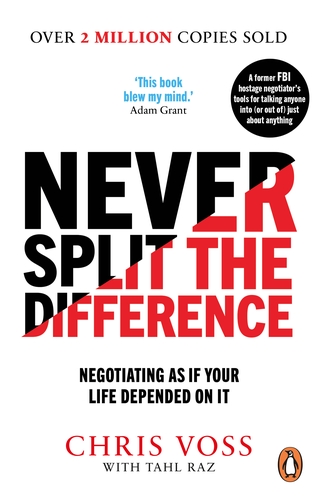
 Roger Fisher,William Ury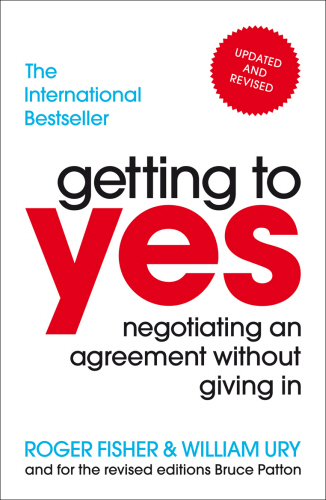
Mind your banners
The final layer is social norms.
Etiquette rules of the 20th century no longer apply. There's no one right way to be that we can aspire toward anymore. It's all fragmented in a four-dimensional space defined by generational, gender, political, and social-class spectrums.
Each cohort is enforcing its own norms in practice and fighting to make them the de facto standard. When people forget how to handle conflict with grace and refuse to be flexible, you get culture wars.
Previous generations understood conflict as a normal, inevitable part of life. They valued constructive pushback, expected thick-skinned resilience, and engaged people, if nothing else, out of courtesy to acknowledge the person. They said what needed saying with respect and civility for the opposing messenger, while rejecting violence and foul play. Not everyone, not always, but at least it was a shared ideal and a social-interaction charter.
The world moved on from those values. I don't know if it's the screens that made us change, or radicalized politics, or both, but the name of the game now is avoidance.
Enemies pretend to be friends, tricky inbound texts are left ignored, while relationships are improvised in a permanent state of Stable Ambiguity where everyone does what they want and manages each other behind the scenes.
 Written ByEsther Perel & Mary Alice Miller
Maybe past generations tolerated conflict because word of mouth through physical social networks was the fastest way information could be spread, obtained, and verified. The alternative was spending days tracking down the right book and the library that held it, or traveling to get news yourself.
You no longer need people in your own network for information. The magic screen has all your informational needs covered. You can find any point of view explained by any of the leading experts in the field. So why bother with the friction of discussing anything with anyone, especially people who aren’t the source of knowledge that trickles down?
The only thing people still need people around them for is to satisfy other needs; companionship and sex. And since the supply of candidates for both is seemingly infinite, tolerance for discomfort, let alone disagreement, has plummeted to zero. Why negotiate when you can replace? #goodvibesonly
Private, public, professional. Three arenas, same verdict: confrontation wins nothing. It only costs you.
Intellectual arguments seem to be useful only for one thing: teaching a young mind how to argue with itself to fight its way to truth.
If you think you're right about something people tend to be wrong about, there are two possibilities.
Either you're propagating more or less common knowledge produced by others; in which case you can use it to provide a service or produce content about it, but it means doing the same as millions of other people, which makes breaking through extremely difficult and asymmetrical returns highly unlikely.
Or you have an original insight, in which case you'd be dumb to give it away for free online or while socializing. To claim it as yours and hopefully capitalize on it, you have exactly two options:
- Prove it in practice on the market, or
- Develop the entire thesis in writing.
End of discussion.
"The best lack all conviction, while the worst are full of passionate intensity."
— William Butler Yeats