
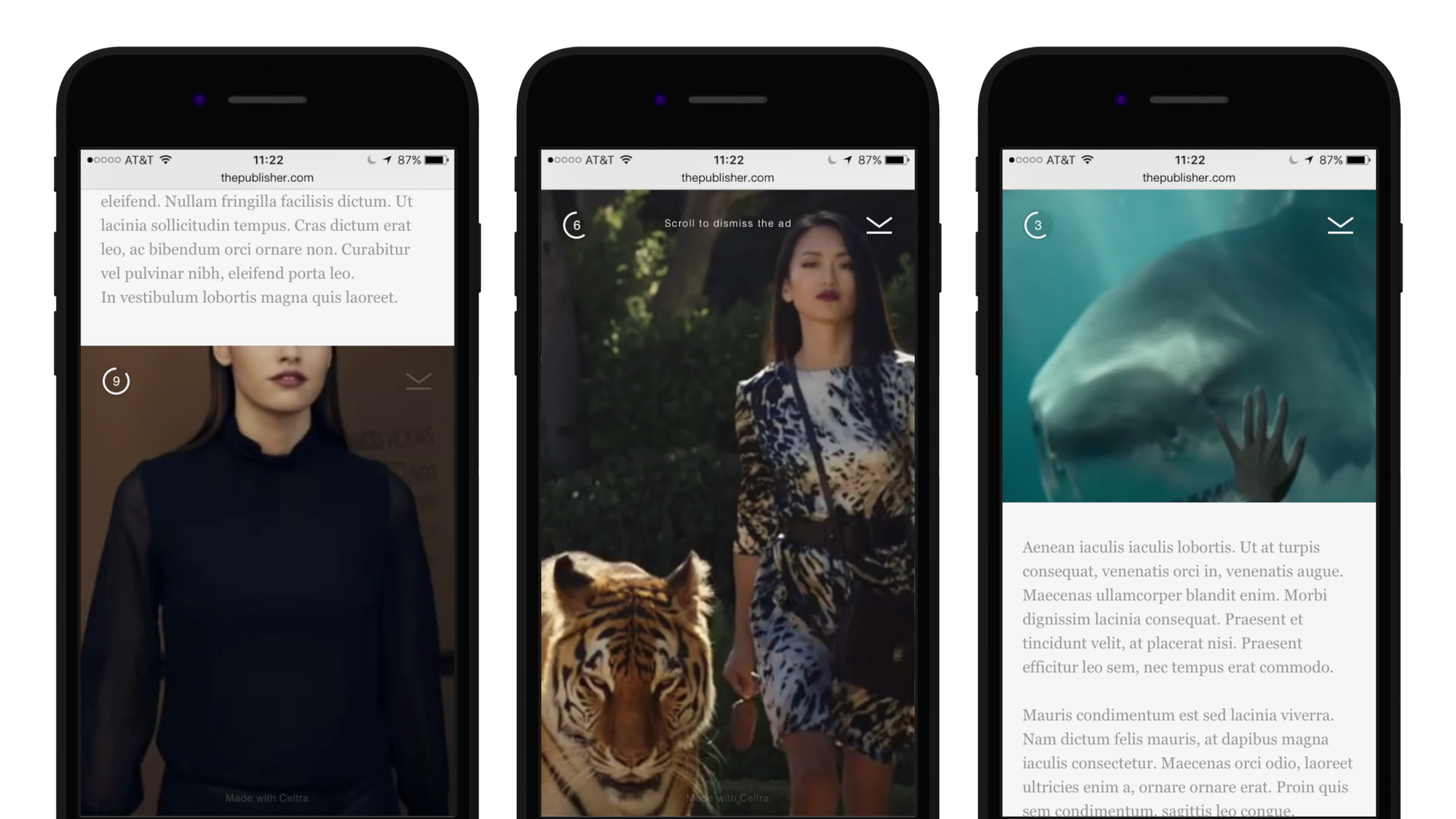
Celtra Interscroller
Overview
Company: Celtra
Timeframe: 2014–2015
Role: Director of Product
Background
Banners had stayed the same awkward rectangles since the first one ran on HotWired in 1994, and their click-through rate had fallen from 44% to an average of 0.05% by 2014.
With leading media conglomerates, publishers, and ad networks on its client list, Celtra saw an opportunity for innovation. We set out to increase the value of ad inventory for publishers and yield better performance for advertisers by improving user experience of ad formats.
Results
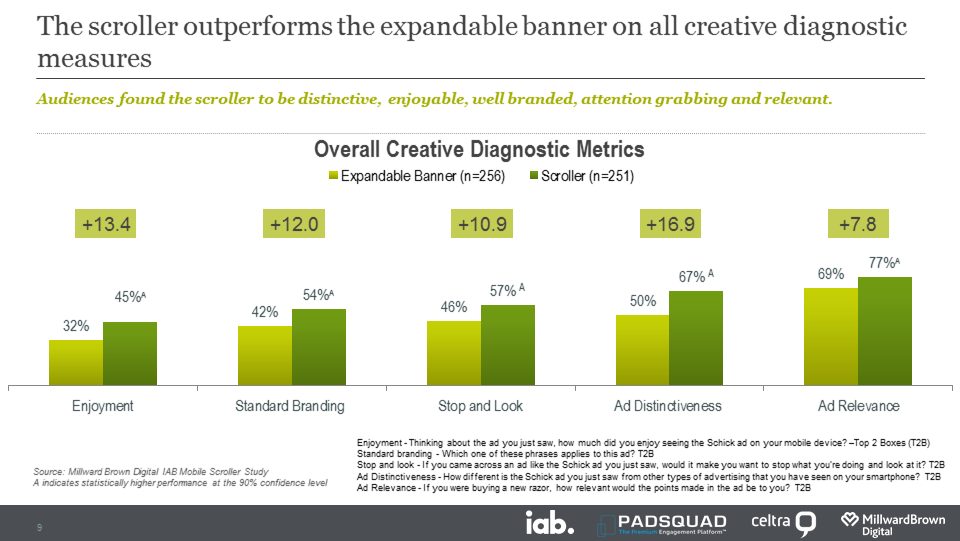
- Performance: Lifted all standard KPIs, with 35% of participants expressing positive feelings, in an IAB study with Millward Brown Digital
- Adoption: 400+ premium global publishers, including Vice, Bloomberg, The Guardian, and Condé Nast
Ownership
I invented the ad format and was responsible for driving its research and product design.
Show individual contributions
- Designed a multivariant eye-tracking experiment that A/B/n-tested people’s responses to the visual intensity of ads
- Designed 10 concepts for new ad formats, three of which were developed into prototypes
- Designed the winning Interscroller format
- Wrote thought leadership articles explaining the format’s design rationale to the industry
The leadership side of the role also included supporting the account managers during running pilot campaigns with selected partner customers.
“It boosted awareness, ad recall, and purchase intent, outperforming the standard expandable banner in nearly every category. Equally importantly, it was a hit with the audience.”
— Interactive Advertising Bureau (IAB)
Highlights
We are all banner blind, or are we?
If people truly hate ads so much, why do Super Bowl and Hall of Fame ads collect millions of views on YouTube, and people enjoy flipping through glossy magazines that are mostly full-page ads spreads? This question formed the hypothesis that people block out intrusion and gimmicks, but pay attention to ads that give them something of value.
Out of sight, out of mind
We run a multivariant eye-tracking study to measure how 144 people responded to four levels of visual intensity: a static photo, a cinemagraph, a photo sequence, and video. Every ad promoted the same dummy brand to remove brand bias, and each participant saw one ad type on one device in a tightly controlled user-device-media lab environment.
The results proved beyond doubt that people see the ads, especially on smartphones, where the format took up almost a third of the screen. Cinemagraphs held attention longest on mobile and image sequences on laptops, so moderate motion worked best.
The findings became three ad UX principles:
- Never block, cover, or take control away from the user.
- Give value instantly, or expect to be ignored.
- Meet the expectations set by apps: low latency, gestures, and smooth transitions.
Ideation
Ten format concepts explored frictionless opt-in interactions and ad placements within common app and website patterns, as well as responsive design opportunities and constraints.
The goal was to design a format that would feel like a native part of the publisher’s site while giving advertisers a big canvas for storytelling without needing a user to tap it. A few concepts became prototypes, three ran as pilot campaigns, and one became a GA product: the Interscroller.
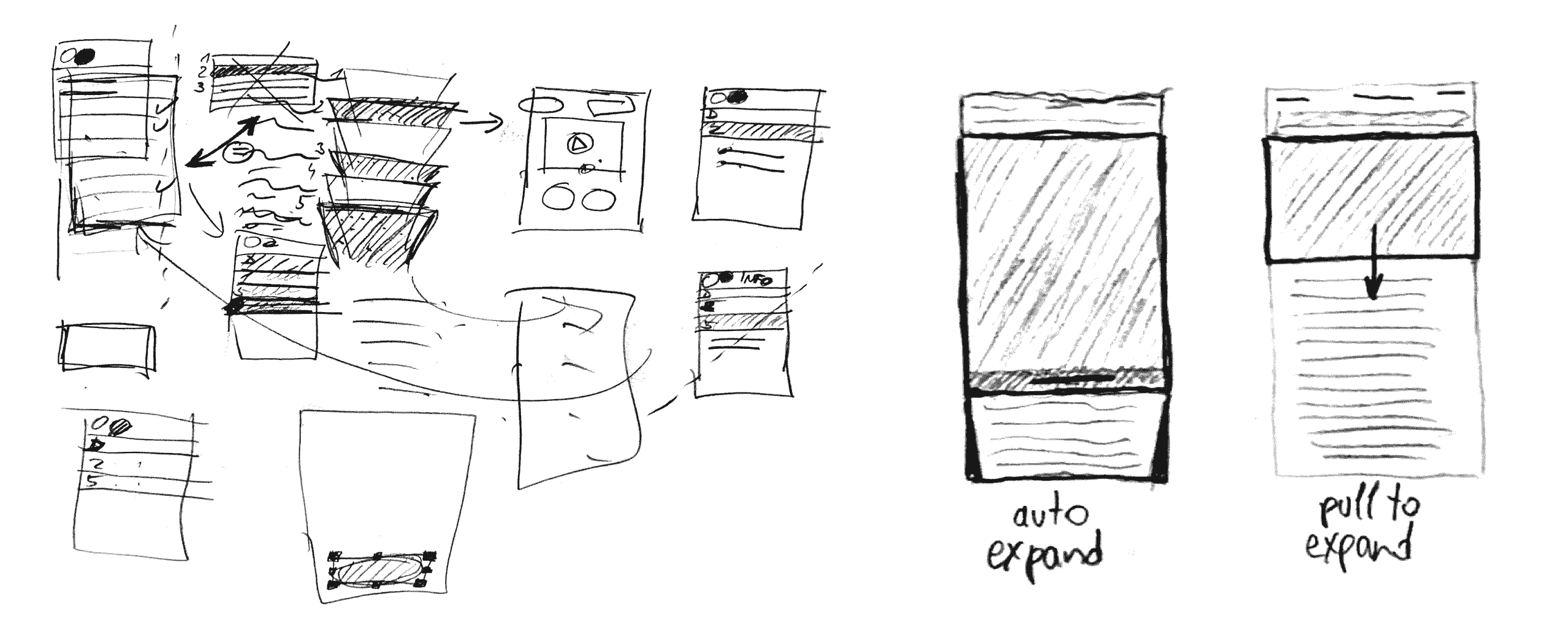
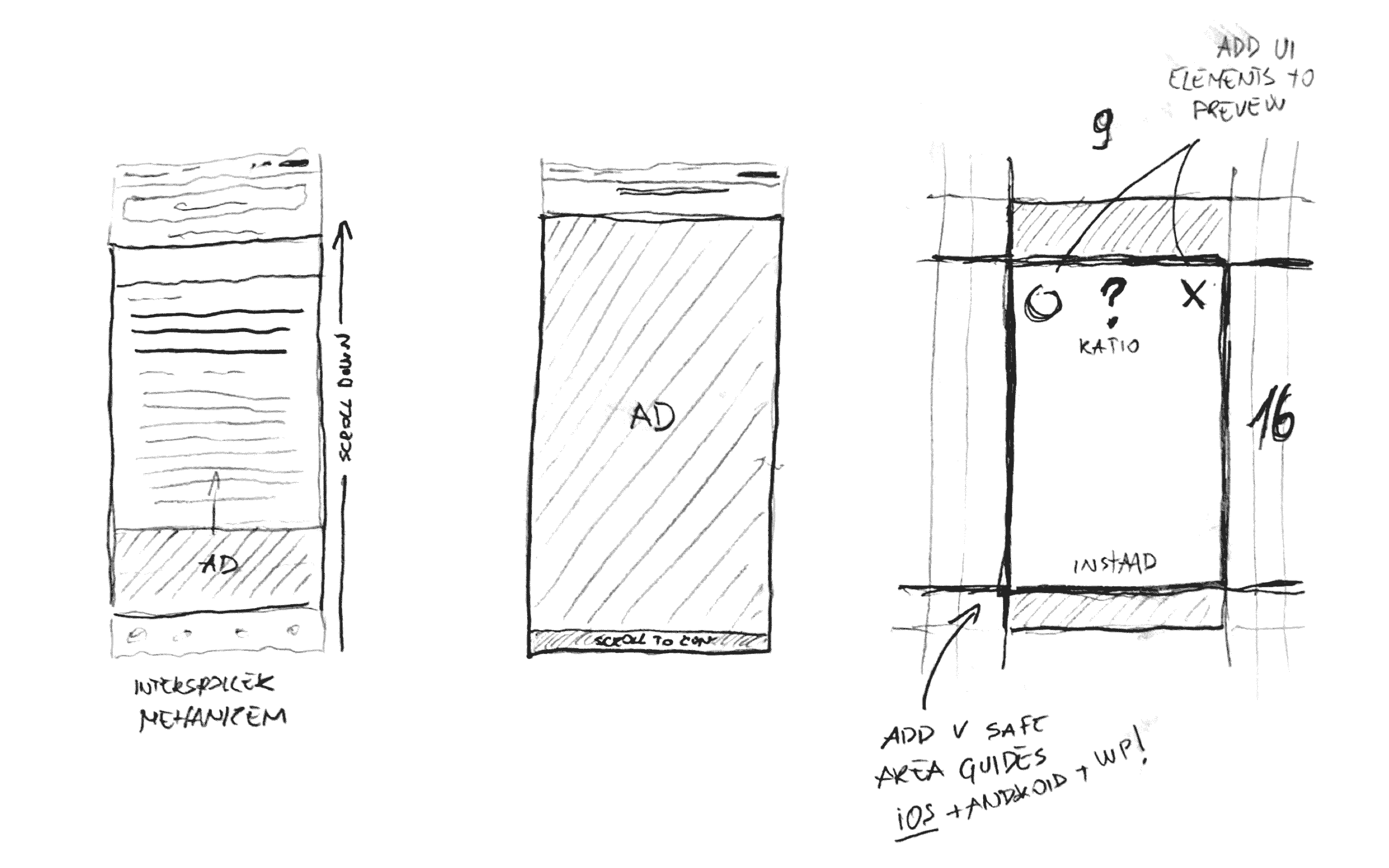
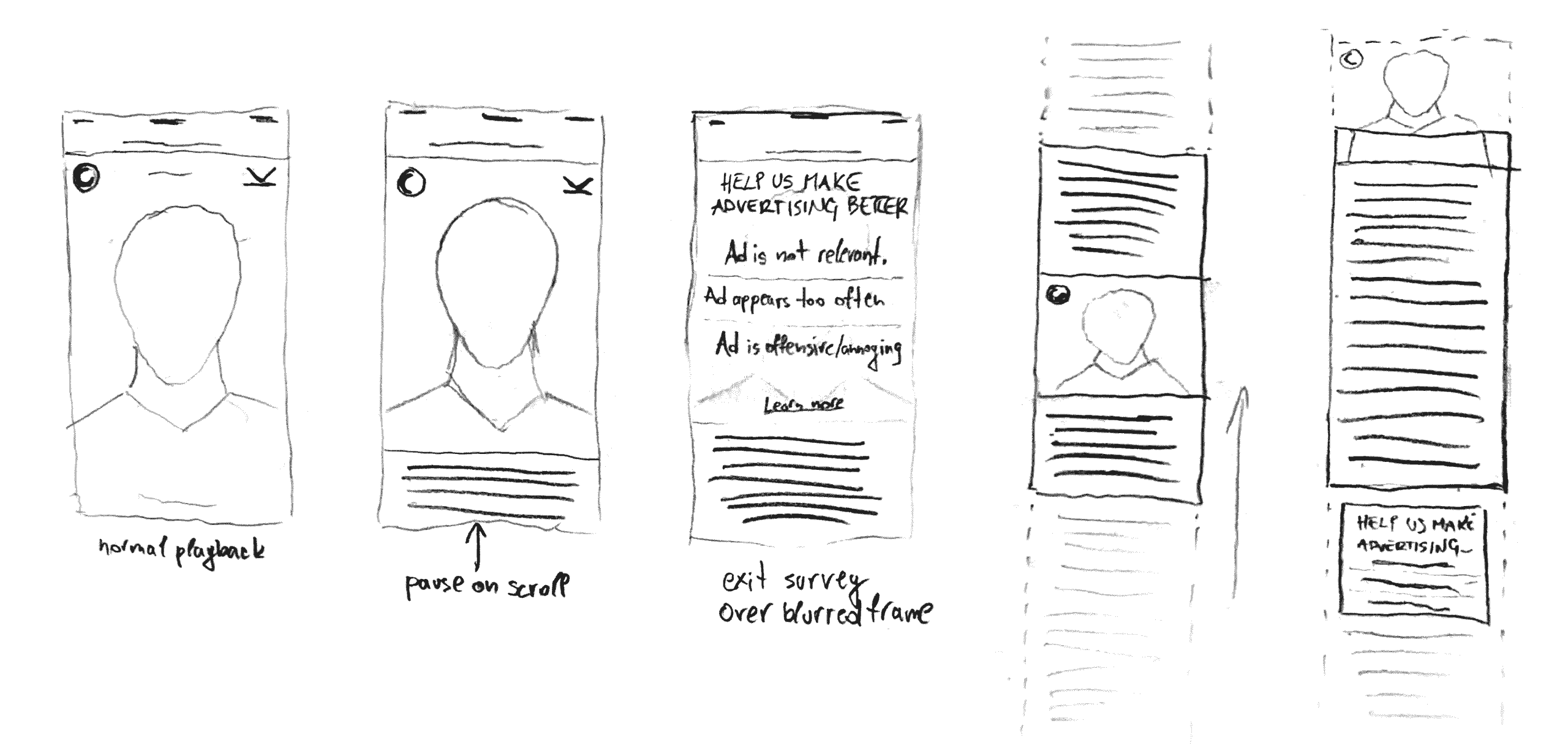
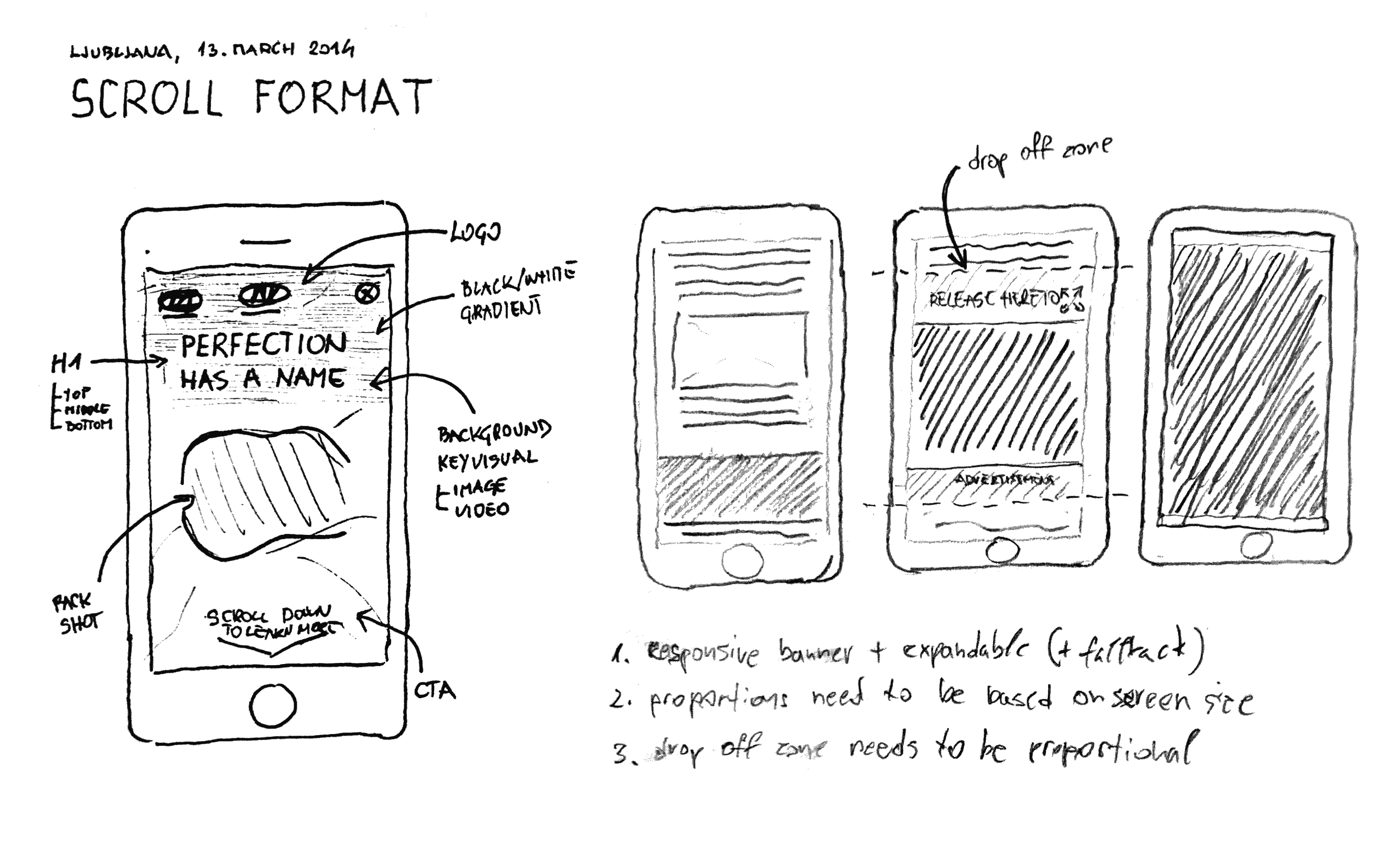
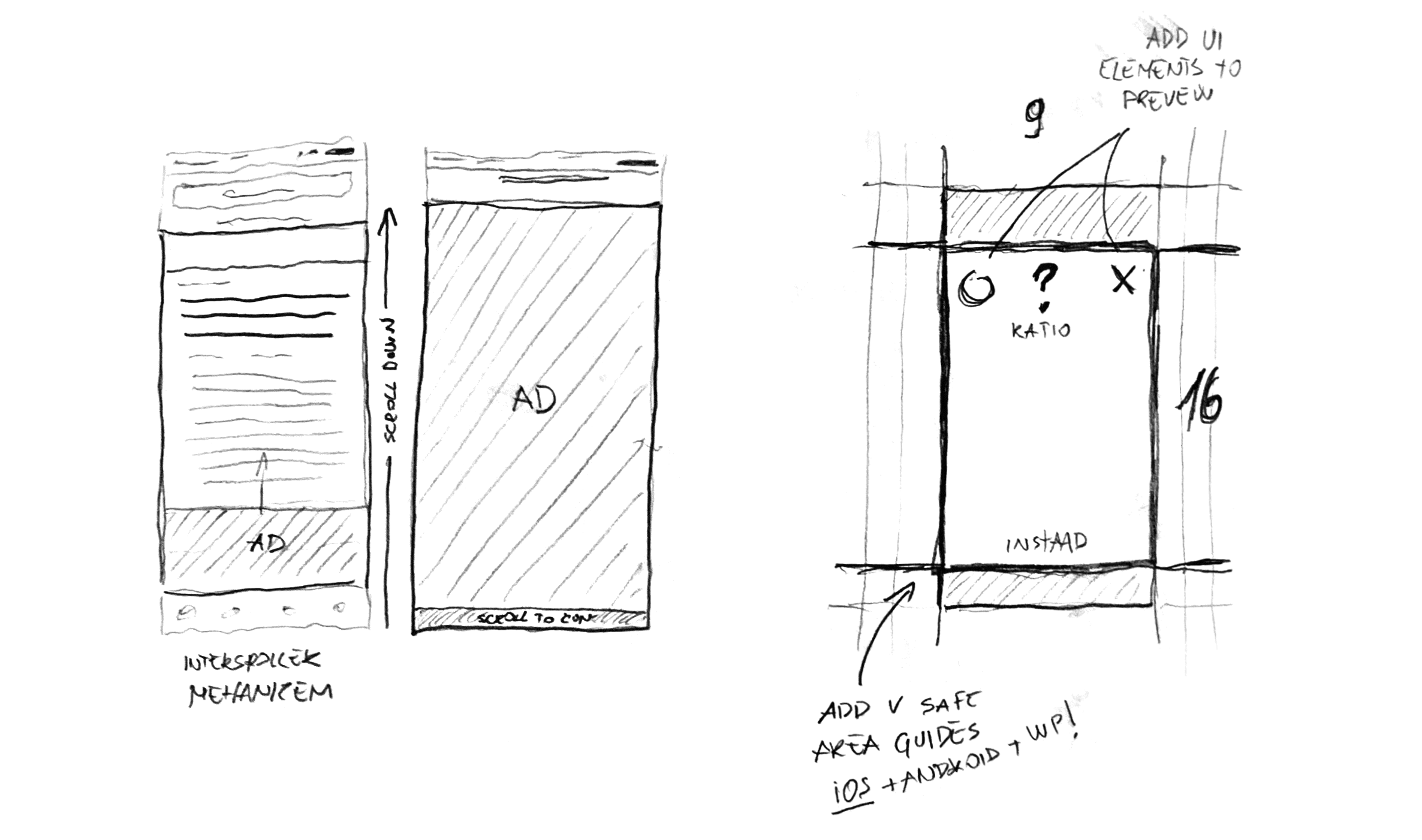
Concept exploration sketches
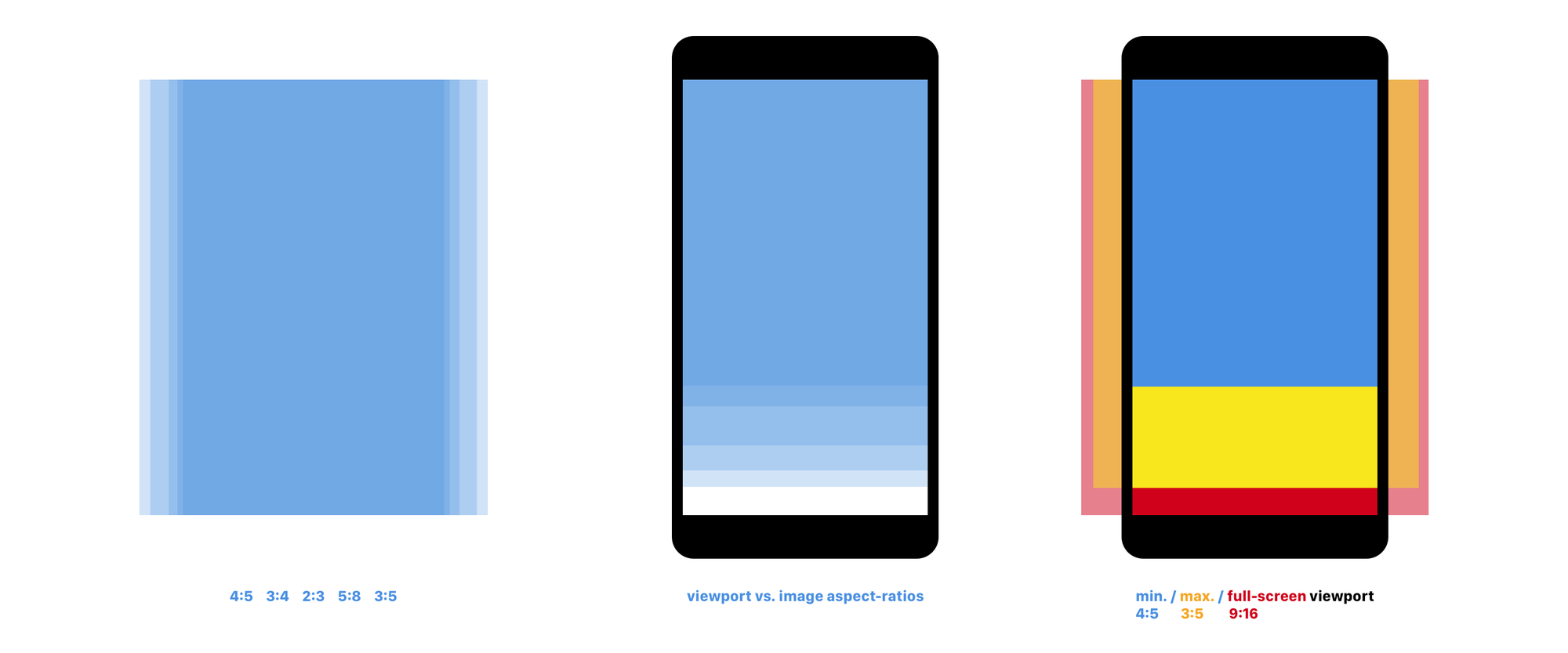
Launch and reception
Interscroller debuted on Telegraph.co.uk in October 2014 and was launched in November the same year in partnership with Opera Mediaworks, AdTheorent®, and Allrecipes.
“The Interscroller unit is a key component within a powerful trend where mobile ads are continuously adapting to fit native mobile interfaces and experiences to ultimately become more beautiful and memorable.”
— Scott Swanson, President, Global Advertising Sales, Opera Mediaworks
A month later, the IAB published an independent consumer research report in partnership with Millward Brown Digital stating that:
“The ad worked well for all ages, but Millennials showed a particularly strong response to the way the scroller revealed itself, with 44% expressing positive feelings about it (as compared to 31% of those over 35 years old).”
— Interactive Advertising Bureau (IAB)
By 2018, the Interscroller regularly ran on more than 400 global publishers, including Vice, Bloomberg, The New Yorker, The Guardian, The Atlantic, Conde Nast, Mail Online, and other media giants. It’s not uncommon to see it in the wild to this day.
Credits
Engineering: J. Jančar, K. Slavič, G. Kozak
Product management: G. Lamden, T. Štrok
Data analysis: N. Smith, L. Karelis